



Why Do Kidney Stones Keep Coming Back, and When Is a Metabolic Evaluation Needed?
A patient-focused guide explaining why kidney stones recur and when a detailed metabolic evaluation is appropriate. The article distinguishes basic screening from further testing for recurrent or high-risk stone formers, explains the role of stone analysis, blood tests and 24-hour urine collection, and connects findings with personalised prevention and follow-up.
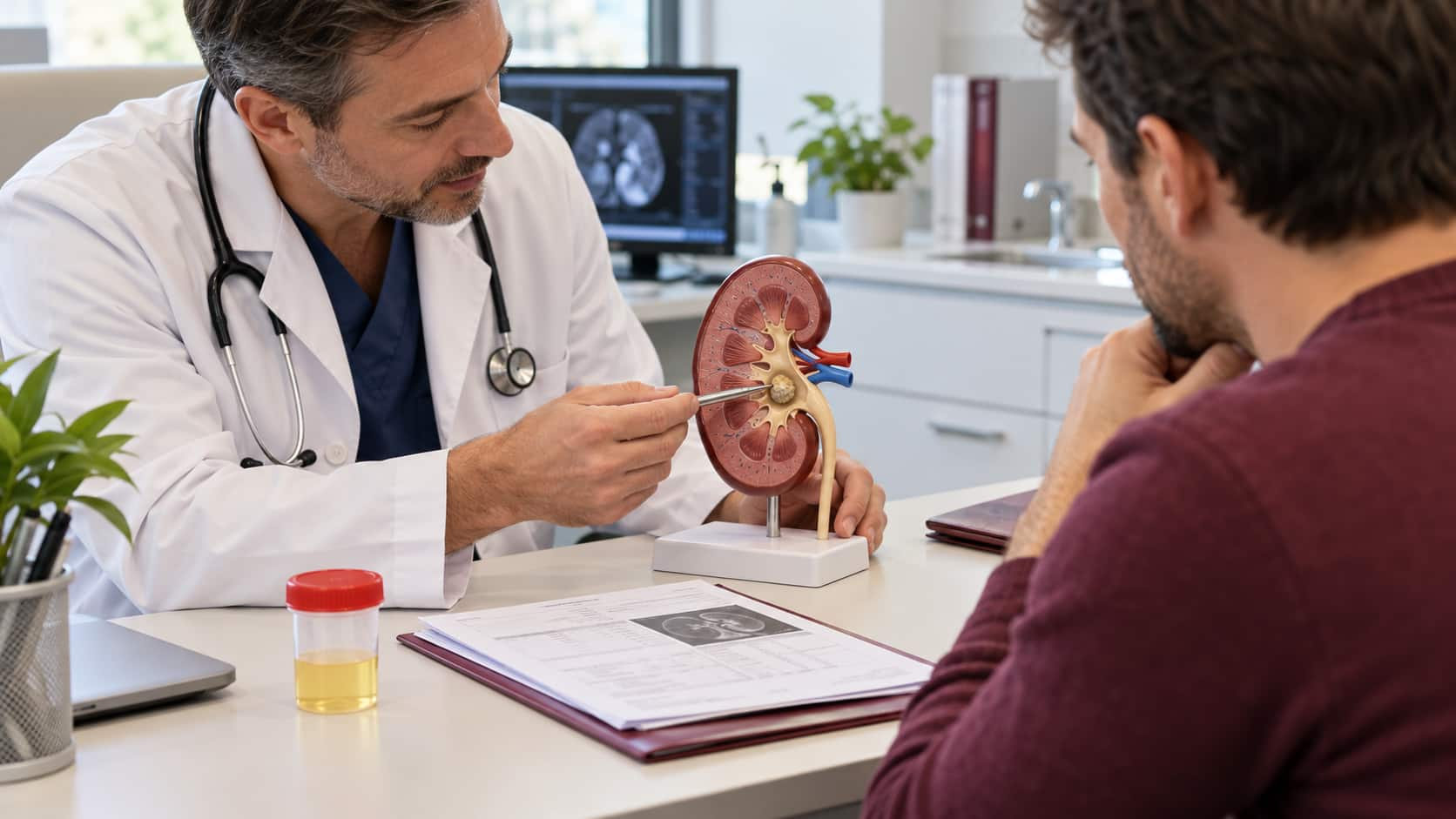
Passing or having a kidney stone removed can bring considerable relief, but it does not always address the conditions that allowed the stone to form. Another episode may develop if urine remains concentrated, certain minerals stay elevated, or an underlying health condition continues to affect urine chemistry. Understanding why kidney stones keep coming back helps move the discussion beyond treating each painful episode.
A metabolic evaluation for kidney stones investigates these contributing factors through medical history, laboratory testing and, when available, stone analysis. Everyone with a stone benefits from basic assessment, while a more detailed investigation is particularly relevant when stones recur or the risk of future complications is higher.
Why Do Kidney Stones Keep Coming Back After Treatment?
Stone removal treats an existing stone, but the tendency to form crystals may persist. Low urine volume allows stone-forming substances to become more concentrated. Depending on the stone type, excess urinary calcium, oxalate or uric acid, insufficient citrate, or an unsuitable urine pH can encourage further formation. Drinking more water can help, although hydration alone may not correct every contributing factor.
Diet, inherited tendencies, certain medicines and conditions affecting digestion or mineral balance can also influence risk. A stone detected after treatment may be newly formed, but a remaining fragment can also enlarge. Reviewing previous imaging and treatment records helps clarify what has happened. Repeated episodes should prompt a discussion about prevention rather than an assumption that another procedure will resolve the underlying tendency.
When Is a Metabolic Evaluation Needed for Recurrent Kidney Stones?
People who develop recurrent kidney stones are generally candidates for a detailed metabolic assessment. This is especially relevant when episodes occur close together, several stones are present, or new stones appear despite changes to fluid intake and diet. The purpose is to identify measurable risk factors that can guide a prevention plan, rather than repeatedly offering the same general advice.
Your clinician will consider the number and timing of previous episodes, stone composition, medical conditions, medicines and family history. A detailed assessment usually adds 24-hour urine testing to the basic blood and urine checks. You do not need to wait for several further painful attacks before discussing testing; an established pattern of recurrence is a reason to review whether your investigation has been sufficiently comprehensive.
Can You Need a Metabolic Evaluation After Your First Kidney Stone?
A first episode still warrants basic assessment, including medical history, appropriate blood and urine tests, and analysis of a recovered stone when possible. More extensive testing may be appropriate immediately if risk factors are present. Examples include stones beginning at a young age, a strong family history, certain stone compositions, or bowel disease or surgery that affects nutrient absorption.
Having one functioning kidney can also make prevention particularly important because obstruction may have greater consequences, even though a solitary kidney does not itself necessarily increase stone formation. Chronic kidney disease and suspected inherited disorders may similarly justify closer investigation. A first-time patient with lower risk may start with general prevention advice, while additional testing can be discussed according to clinical findings and individual preferences.
What Tests Are Included in a Metabolic Evaluation for Kidney Stones?
The assessment combines information about your health and previous stones with measurements from blood and urine. Your clinician may review eating habits, fluid intake, supplements, prescribed medicines and conditions that affect stone formation. Basic urine testing can help identify infection and assess acidity, while blood tests examine kidney function and relevant mineral or chemical levels. Available stone material provides additional information about its composition.
A comprehensive investigation commonly includes urine collected over a full day, often on two separate days to improve reliability. The exact panel depends on your history and suspected stone type. Imaging serves a different purpose: it shows existing stones and their location, whereas metabolic testing investigates the chemical environment that may allow further stones to develop. These findings are interpreted together when planning care.
What Does a 24-Hour Urine Test Reveal About Kidney Stone Recurrence?
A 24-hour urine test for kidney stones measures daily urine volume and substances such as calcium, oxalate, citrate, uric acid and sodium, alongside urine pH and creatinine. Together, these results can reveal concentrated urine, excess stone-forming substances or insufficient protective factors. Creatinine also helps assess whether the collection is complete. A normal routine urine sample does not provide the same information as a properly collected full-day sample.
How Do Blood Tests and Stone Analysis Help Identify Kidney Stone Risk Factors?
Blood tests assess kidney function and may detect abnormal calcium, uric acid or electrolyte levels. Further testing, such as parathyroid hormone measurement, may be appropriate when findings suggest an underlying disorder. Analysis of a passed or surgically removed stone identifies its mineral composition, helping distinguish calcium-based stones from uric acid, cystine or infection-related stones. This distinction helps clinicians select relevant investigations and avoid treating every stone as though it has the same cause.
When Should You Complete 24-Hour Urine Testing After a Kidney Stone Episode?
Urine collection for prevention planning is usually arranged after the acute episode has settled and you have returned to your usual diet and fluid intake. Pain, vomiting, infection and temporary changes in eating or drinking can affect the results. Testing is often organised several weeks after an episode, sometimes around three months, with the timing adjusted to your recovery and clinical circumstances.
Follow the laboratory's instructions carefully, including the start and finish times, storage requirements and what to do if a sample is missed. Avoid deliberately changing your usual habits simply to improve the numbers, and discuss medicines without stopping them yourself. This timing applies to detailed prevention testing; blood tests, urine testing for infection and other investigations needed during an acute episode should be performed when clinically indicated.
How Do Metabolic Evaluation Results Guide Kidney Stone Prevention?
Results help make prevention more specific. Low urine volume may lead to an individual fluid target, while high urinary sodium can support a closer review of salt intake. Elevated oxalate or other abnormalities may require tailored dietary advice. Restricting dietary calcium without guidance can be counterproductive for calcium oxalate stones because calcium consumed with food helps bind oxalate in the digestive tract.
Some patients also benefit from prescribed medication. Potassium citrate may be considered for selected patients with persistently low citrate or acidic urine, while other treatments depend on stone type and the abnormalities identified. Medication choices require consideration of kidney function, potential adverse effects and response to dietary measures. The aim is a practical plan that addresses your findings and health needs, rather than a universal diet or prescription for everyone.
When Should Metabolic Tests Be Repeated to Monitor Kidney Stone Recurrence Risk?
Repeat testing helps establish whether the prevention plan is changing the factors it was designed to address. After medication is started, a repeat 24-hour urine collection may be arranged at approximately eight to twelve weeks. Results can help your clinician assess response and decide whether dietary advice or treatment needs adjusting. Blood monitoring may also be necessary to check kidney function and medication-related changes.
Once urine findings are stable, testing may be repeated annually, although the schedule depends on stone activity, treatment and individual risk. New stones or persistent abnormalities may justify earlier reassessment. Kidney stone recurrence prevention also involves reviewing symptoms and arranging imaging when appropriate, because improved urine results do not guarantee that no stones remain or will develop. Follow-up should assess both the laboratory response and what is happening clinically.