
What is multiparametric prostate MRI?
Where a standard MRI takes a picture of the prostate, a multiparametric MRI (mpMRI) both pictures it and maps its function — combining several sequences to study the gland's structure, cell density and blood supply. This gives far more information and helps distinguish healthy from abnormal tissue with high accuracy.
What it is used for
mpMRI is central to diagnosing and managing prostate cancer. It detects suspicious areas, shows where they are and how aggressive they look, and — importantly — helps tell clinically significant cancers that need treatment from slow-growing ones that can simply be monitored.
What to expect
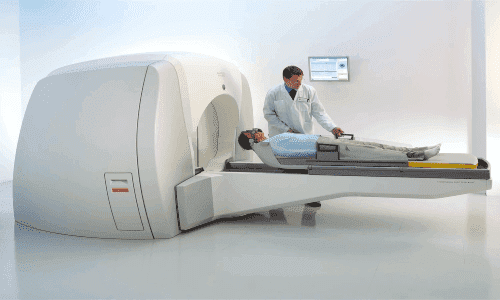
You lie on your back on a table that slides into the MRI tunnel; sometimes a contrast agent is given through a small cannula in the arm. The machine makes loud, rhythmic noises (you are given headphones), and it is important to stay still. The radiation-free, painless scan takes about 30–45 minutes.
Advantages
- High accuracy in spotting suspicious areas
- Fewer unnecessary biopsies
- Guides targeted biopsies to the right spot when one is needed
- Supports precise staging and personalised treatment
Good to know
Because of the strong magnet, mpMRI is not suitable for people with certain metal implants, so you complete a safety form beforehand. It uses no radiation and is very safe; the radiologist scores any suspicious area (for example a PI-RADS score) to guide the next step.