What is the Da Vinci system?
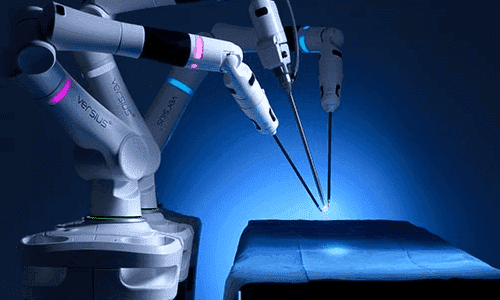
The Da Vinci Surgical System is an advanced platform for robotic-assisted surgery. It is not an autonomous robot but a sophisticated tool controlled entirely by the surgeon, who operates from a console seated comfortably nearby.
Developed by Intuitive Surgical, it has three parts: the surgeon's console, a patient-side cart with robotic arms, and a high-definition 3D camera — together giving the surgeon greater precision and control during complex procedures.
Key features
Several features set robotic surgery apart from both open and standard keyhole surgery:
- High-resolution, magnified 3D vision with exceptional depth and clarity
- EndoWrist instruments with seven degrees of freedom — beyond the human wrist
- Tremor filtration that smooths out the hand's natural micro-movements
- Motion scaling that turns larger hand movements into tiny, precise instrument movements
What it is used for
Robotic surgery is used across many specialties, including urology (such as prostate surgery), gynaecology (such as fibroid removal), general surgery (such as hernia repair), thoracic surgery (such as lung resection) and colorectal surgery.
What to expect
The operation is performed under general anaesthesia through a few small incisions, so you feel no pain during surgery and far less afterwards than with open surgery. The length of the operation depends on the procedure and your individual case; your surgeon gives you an estimate beforehand.
Robotic surgery is not right for everyone — your surgeon decides after reviewing your health, medical history and the specific operation.
Advantages
- Less blood loss and a lower chance of transfusion
- Shorter hospital stay and faster recovery
- Lower risk of infection and complications
- Smaller, less noticeable scars
Good to know
As with any surgery, there are risks — including infection, bleeding and reactions to anaesthesia — which your surgeon discusses with you. Afterwards, follow your surgeon's instructions on rest, wound care and activity, and contact your team promptly if you notice fever, severe pain or unusual redness or discharge.