What to Ask About PET-CT, MRI and Biopsy Before Cancer Treatment
Learn what to ask about PET-CT, MRI and biopsy before cancer treatment, including why tests are needed, preparation, risks and how results guide care.
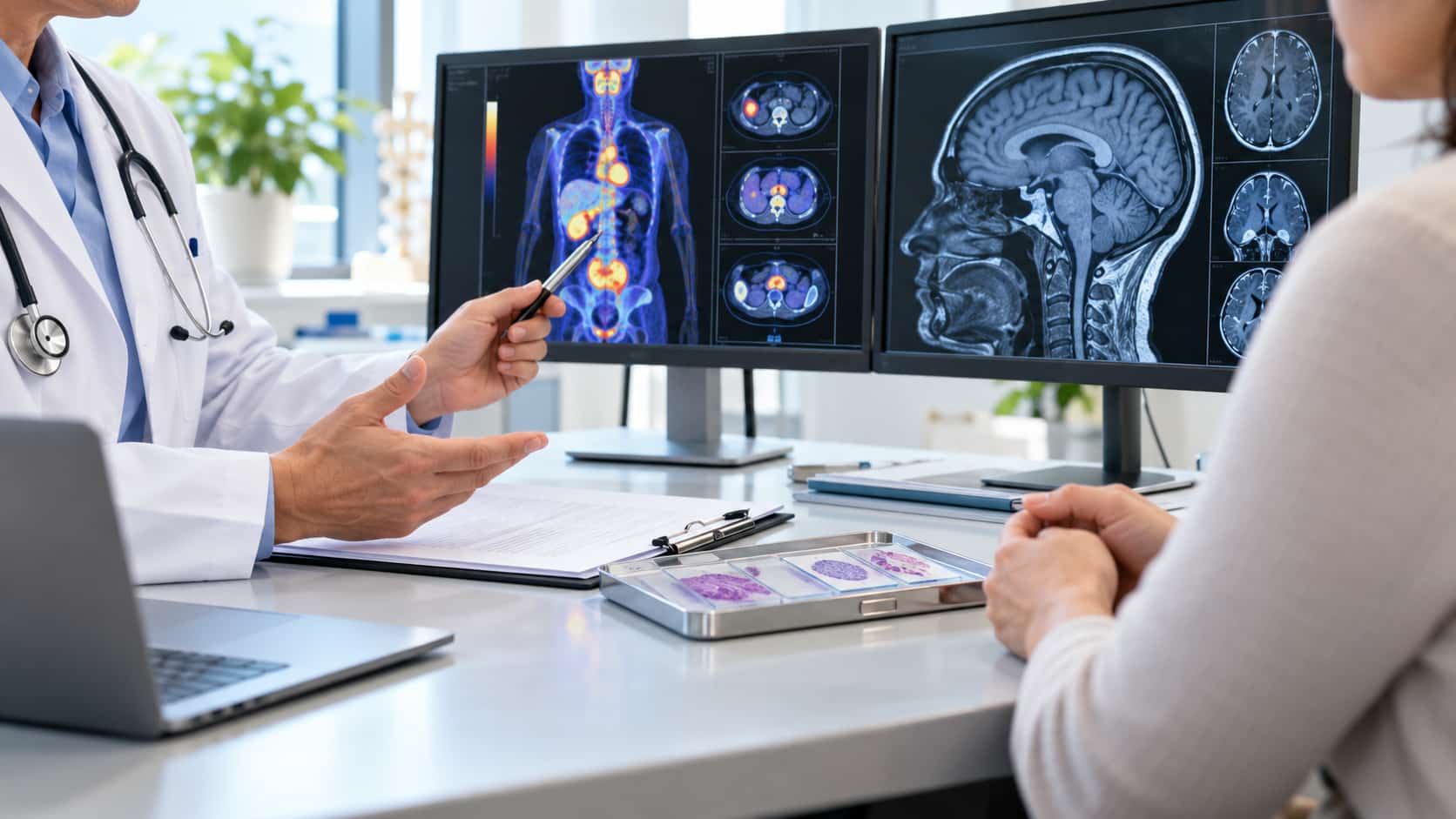
Preparing for cancer treatment often involves several appointments, unfamiliar test names and decisions that can feel difficult to follow. PET-CT, MRI and biopsy provide different kinds of information. Understanding why each investigation has been recommended can help you discuss the next steps with your care team and know what to expect before, during and after testing.
The most useful questions before cancer treatment connect each test to a practical decision. Ask what your doctor needs to clarify, whether previous results can be used and which findings could change your care. Your individual testing plan should reflect the suspected or confirmed cancer, your medical history and the treatment options being considered.
Do I Need PET-CT, MRI and a Biopsy Before Starting Cancer Treatment?
Not everyone needs all three investigations. The choice depends on the suspected cancer type, its location, findings already available and the information needed to plan treatment. Imaging helps assess where abnormalities are and whether disease may have spread. A biopsy usually provides the tissue or cells needed to establish the diagnosis and identify features relevant to treatment.
Ask your doctor what specific question each proposed test will answer and whether its result could change the recommended approach. If you have already undergone investigations elsewhere, bring the reports and original images, and ask whether previous tissue samples need review. The order of testing also varies; there is no single sequence that suits every patient.
What Can a PET-CT Scan Tell My Doctor About My Cancer?
PET-CT combines information about radiotracer uptake with CT images showing anatomical structures. In selected cancers, this can help assess the extent of disease and clarify whether suspicious areas need further investigation. The commonly used FDG tracer reflects glucose uptake, although other tracers may be selected for particular cancers. Ask which tracer is planned and why it suits your situation.
Useful PET-CT scan questions also address uncertainty. Infection and inflammation can increase tracer uptake, so an active area does not automatically mean cancer. Some tumors or very small deposits may not be clearly detected. Ask how the findings will be compared with other scans and pathology, and whether an unexpected result would need confirmation before your treatment plan changes.
What Additional Information Could an MRI Provide?
Une MRI before cancer treatment may be recommended when detailed images of a particular body region would help answer a question left unresolved by other tests. MRI uses magnetic fields and radio waves without ionizing radiation. It can provide valuable detail about soft tissues, including the brain, liver and pelvic organs, depending on the clinical situation.
Ask which area will be examined and how the findings could affect surgery, radiotherapy or another treatment decision. Your doctor can explain whether contrast is needed and what additional information it may provide. Share details of implants, previous contrast reactions and kidney problems before the appointment. If enclosed spaces are difficult for you, discuss support or sedation arrangements in advance.
What Should I Ask About My Biopsy Before the Procedure?
A biopsy involves collecting tissue or cells for examination by a pathologist. Its purpose is usually to establish what an abnormality represents and, when cancer is present, identify its type and relevant characteristics. A suspicious scan does not by itself provide all the information available from examining a sample. Ask what the biopsy is expected to clarify in your case.
Practical biopsy questions should cover who will perform the procedure, which area will be sampled and how discomfort will be managed. Confirm whether you will need local anesthesia, sedation or general anesthesia, and what recovery involves. Before leaving, obtain instructions about wound care, activity restrictions and symptoms that require medical attention, together with a contact number for concerns.
Which Biopsy Method Is Appropriate for My Suspected Cancer?
The method depends on the location of the abnormality, how safely it can be reached and the information the laboratory needs. Options include fine-needle aspiration, core needle biopsy, endoscopic sampling and surgical biopsy. Ask why the proposed method is suitable, whether imaging guidance will be used and whether another approach would provide a more useful sample in your particular situation.
Will My Biopsy Provide Enough Tissue for the Tests I Need?
A sample may be sufficient to identify cancer but insufficient for every additional test. Ask whether the planned collection will support the necessary pathology assessment and any relevant biomarker testing. Depending on the cancer, these tests can help guide treatment selection. If material is limited, your team may consider existing tissue, additional sampling or another appropriate testing approach.
How Should I Prepare for PET-CT, MRI and Biopsy, and What Risks Should I Discuss?
Request written instructions for each appointment because preparation differs between procedures. For an FDG PET-CT scan, fasting, recent exercise and blood glucose can affect image quality. If you have diabetes, obtain an individual plan for meals and medicines rather than changing them yourself. Tell the team if you are pregnant, could be pregnant or are breastfeeding, and ask about radiation exposure and any precautions after the scan.
Before MRI, disclose implanted devices and metal fragments so their safety can be checked. If contrast is planned, discuss kidney function and previous reactions. Before biopsy, provide a complete medication list, including blood thinners and supplements; changes require instructions from your treating team. Ask about bleeding, infection and risks specific to the biopsy site. Confirm fasting requirements, transport after sedation and whom to contact if problems develop afterward.
What Happens If My Imaging or Biopsy Results Are Unclear or Do Not Match?
An uncertain result does not automatically confirm cancer or exclude it. Imaging and pathology examine different aspects of an abnormality, so the findings must be considered together. A scan may show a suspicious area while a biopsy does not provide a definite answer. Your doctors may need to assess whether the sample adequately represents the area that raised concern.
Ask what remains uncertain, whether the original images and tissue should be reviewed together, and what would resolve the discrepancy. Depending on the situation, the next step may involve further laboratory assessment, another imaging study, specialist review or repeat sampling. Establish who will coordinate this process and when you should expect an update. Also ask how the additional investigation affects the proposed treatment schedule.
When Will My Results Be Ready, and How Will They Affect My Treatment Plan?
Different cancer test results may become available at different times. Imaging reports can be completed before all pathology investigations are finished, while additional tissue testing may require longer. Ask for an expected timeframe for each report and clarify whether an initial result is preliminary or complete. Arrange a discussion with your treating specialist so you understand the findings in the context of your whole assessment.